
JMJ
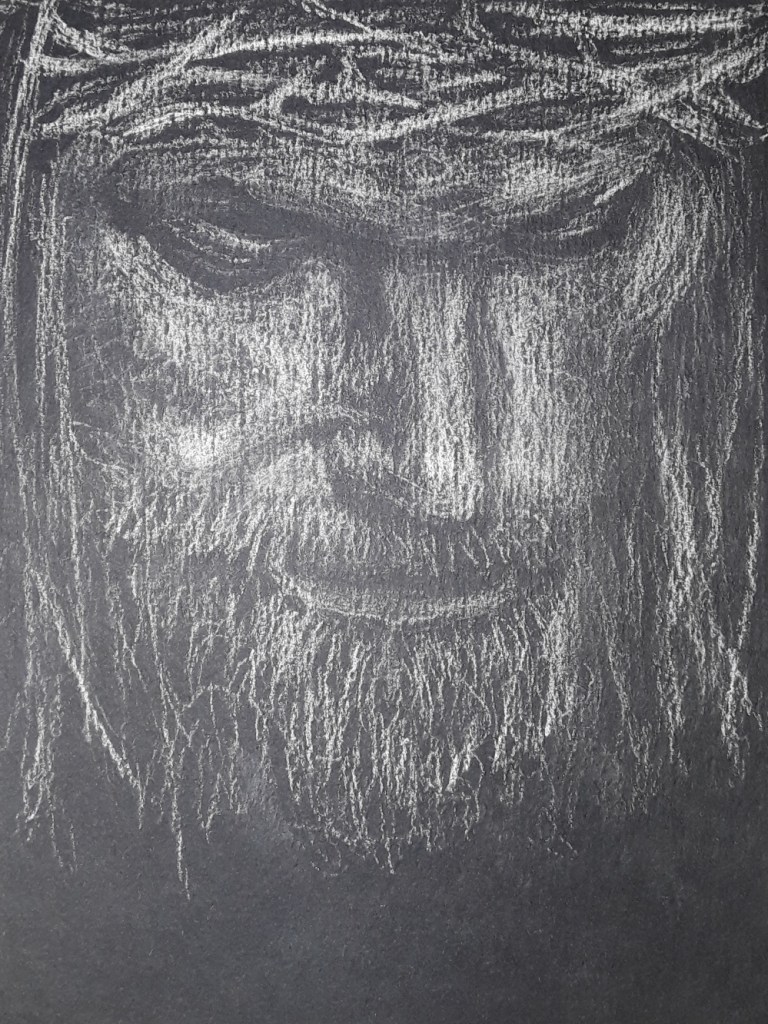
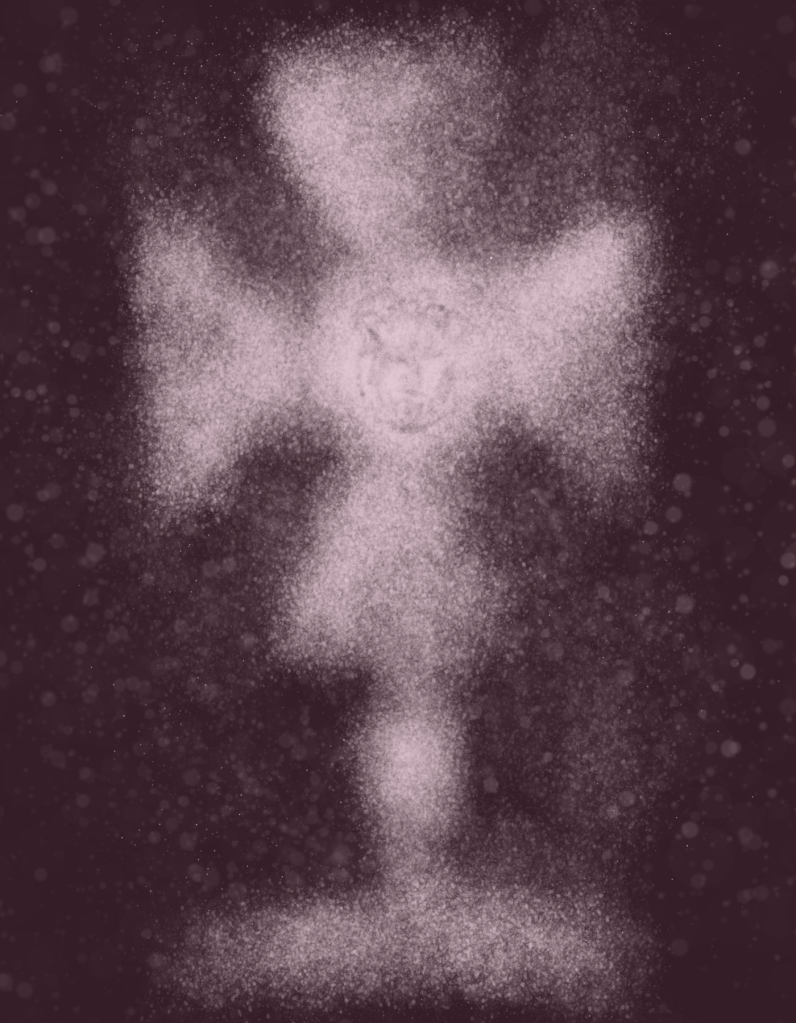

I used flour as the medium for the third mockup which is a model of what I would to develop for the final project. I sprinkled the flour onto a dark colored paper to create an image of the Face of Jesus during His Passion. I used a strainer to dust the deep red paper with white flour. I then used the back of a whisk to indicate the main lines in the portrait. The process and materials develop a sense of meaning behind this project. For example, the use of everyday objects such as a strainer, a whisk, and flour symbolize how even that which is profane, can lead to an understanding of the sacred. No matter where we are or what we are doing, all we do can be lifted up in prayer to our Lord. This ties into the space; I was able to seek out the sacred even while I was working in my home amidst my family.
The process itself requires plenty of patience and offers very little control. No matter how carefully I tried to sprinkle the flour, I couldn’t control how it landed on the paper. While I had very little control I could still generally tell where to sprinkle the flour so that it would create the gaze of Jesus. Even so this caused the image to become very indistinct. Coming into this project, I had the verse 1 Cor 13:12 on my heart: “At present we see indistinctly, as in a mirror, but then face to face. At present I know partially; then I shall know fully, as I am fully known.” At present His portrait is indistinct, yet I can live in hope that we will see face to Face. The use of flour is also meaningful, in that His Passion is the same sacrifice as in the Mass, during which unleavened bread–made from flour–is transubstantiated to become His Body.
I may take a series of pictures as I am progressing through the piece so that I can show how the picture becomes more and more distinct, and perhaps use a printer to print out the series of pictures.
 Vali's Art