
JMJ
3.1 Mapping Designs
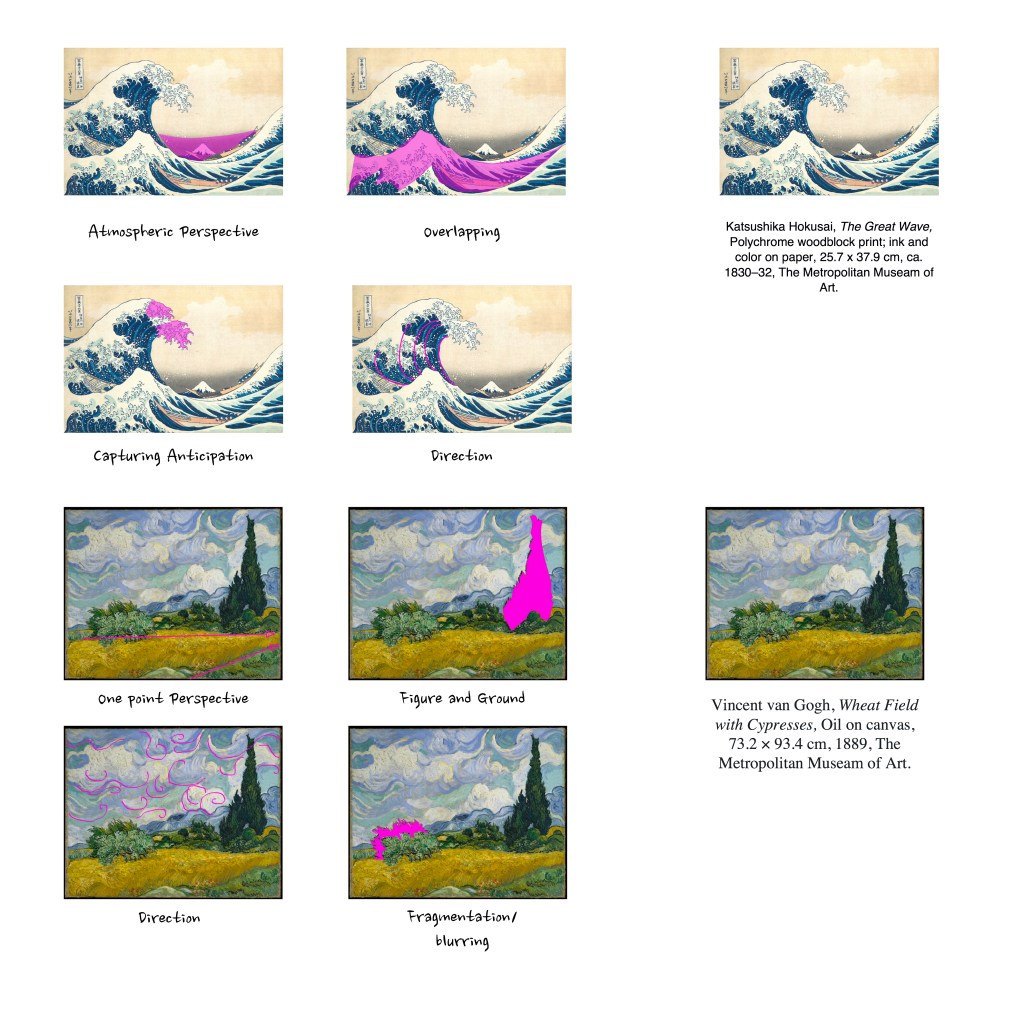
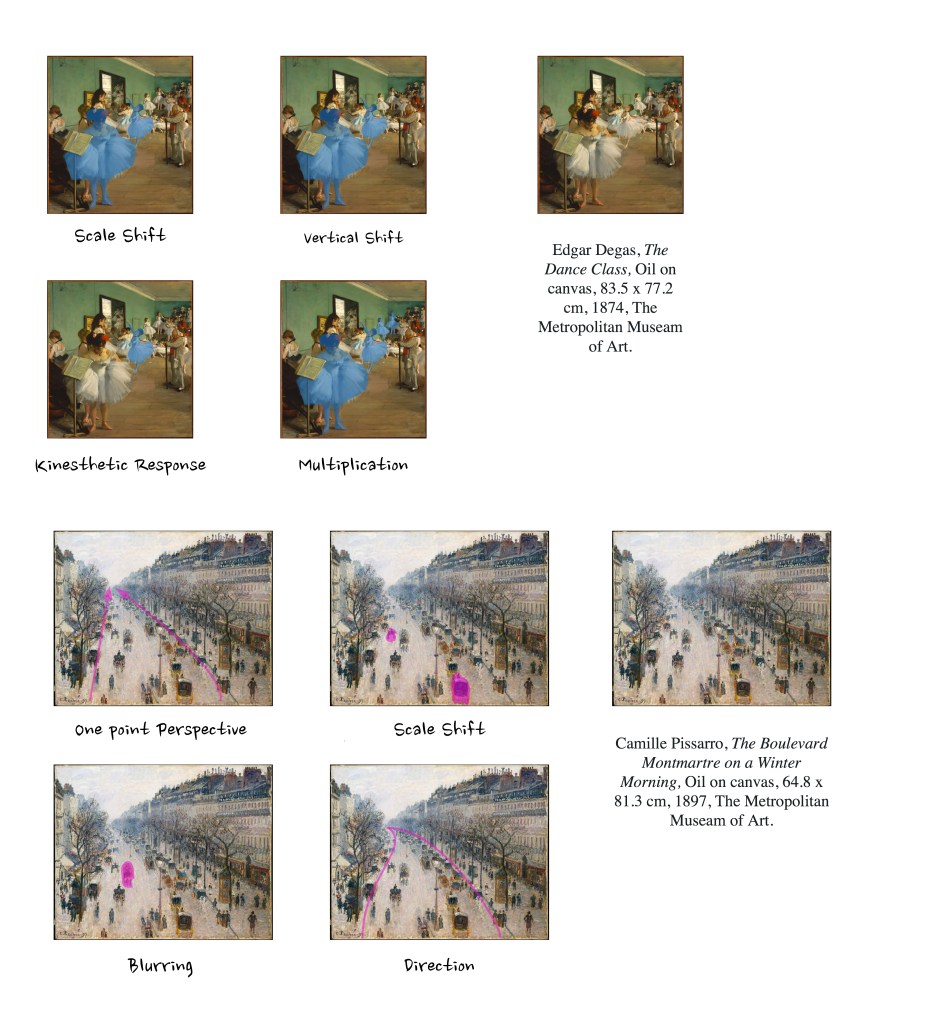
Below are my mapping designs, for which I mapped out two elements of space and two elements of motion in each piece, using either a bright pink or purple to highlight where that element was found. The first artwork is The Great Wave, which shows how overlapping the waves can create the illusion of space and the placement of the wave creates a sense of anticipation of motion in the print. The second artwork, Vincent Van Gogh’s Wheat Field with Cypresses, uses directional lines in the clouds to create the sense of motion. Edgar Degas uses scale shift and vertical shift in The Dance Class to create the sense of space as the dancers becoming smaller and smaller as they go back. The multiplication of these dancers creates the illusion of motion. Camille Pissarro, creates a deep sense of space in The Boulevard Montmartre on a Winter Morning as the people, carriages, and buildings become smaller and smaller converging on a point where the street is no longer visible. The use of blurring of the carriages and people creates the illusion of motion
3.2 Found Action
Composition One
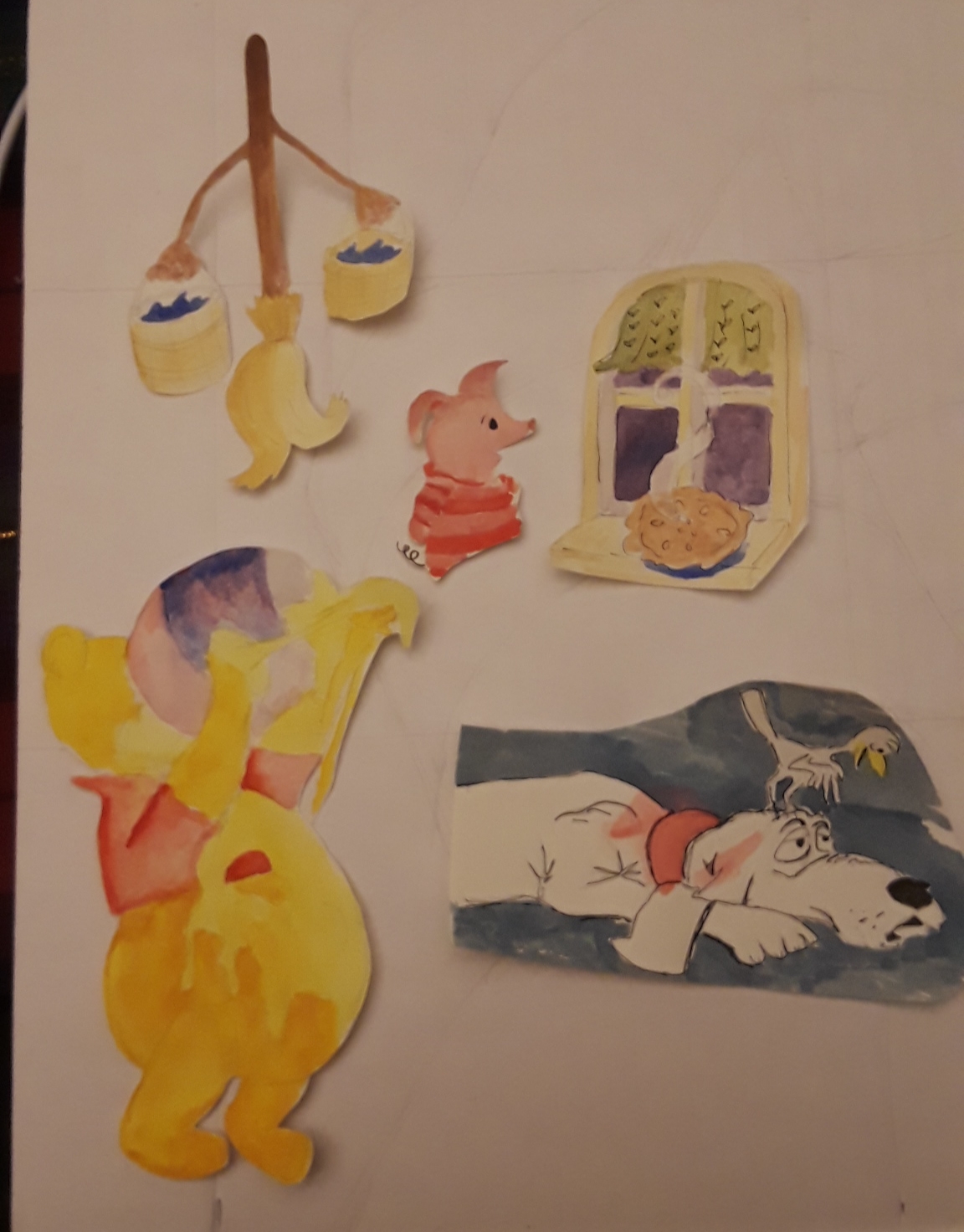
For this first composition, my goal was to create create the sense of space and motion by collaging together different colored pieces of paper with some illustrations from some of my favorite childhood stories. These stories and characters form and define many aspects of my childhood, adding color to many memories creating also the sense of comfort and nostalgia. It was truly a joy to go back and look back through these stories such as Winnie the Pooh, Fantasia, But No Elephants, and Dr. Seuss’s Are You My Mother? I wanted the negative space of the collage to create the figures of my sister and niece. I also decided to leave them as simple black and white sketches to give the illusion that they are themselves illustrations in a children’s book, a part of their own stories while surrounded and formed by other stories.
The illusion of space is found in the the composition due to the overlapping of my sister, my niece and the book which comes to the forefront. The pieces used to create the collage become larger and less detailed and formed going back also creating the sense of space. The space where I was working was also important because I was in my own home, where so many of these memories were formed.
The illusion of motion is created through repetition of the shapes and colors being glued on top of each other. There is also kinesthetic response, as we are familiar with the action of reading a story and can picture ourselves in the same position allowing us to anticipate their movements such as turning the page and reading. The fragmentation of the piece creates a sense of energy as well.
Through this project, I’ve learned about the importance of the process and materials in its relation to the artwork itself. In this case the act of going back through stories in my home and taking the time to draw these characters was sort of a tribute to my childhood. It forced me to slow down and appreciate how these stories create a sense of nostalgia. The process of layering and creating this project forced me to trust the creative process and give the piece space to change from what I initially pictured. The use of paper and bright colors was also important because it relates to the paper which makes up the pages of children’s books.

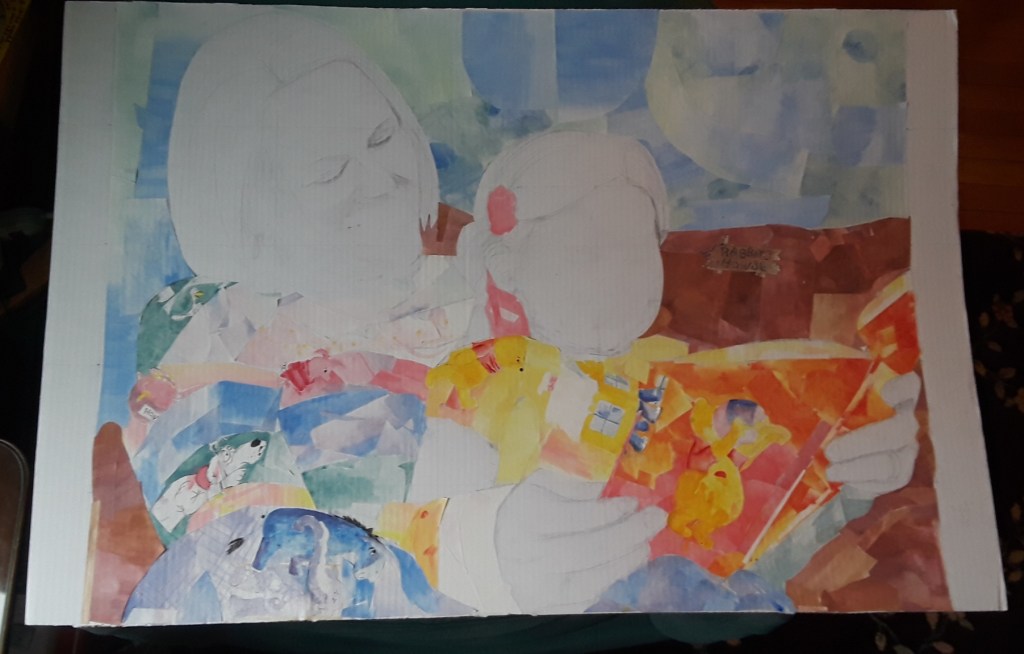

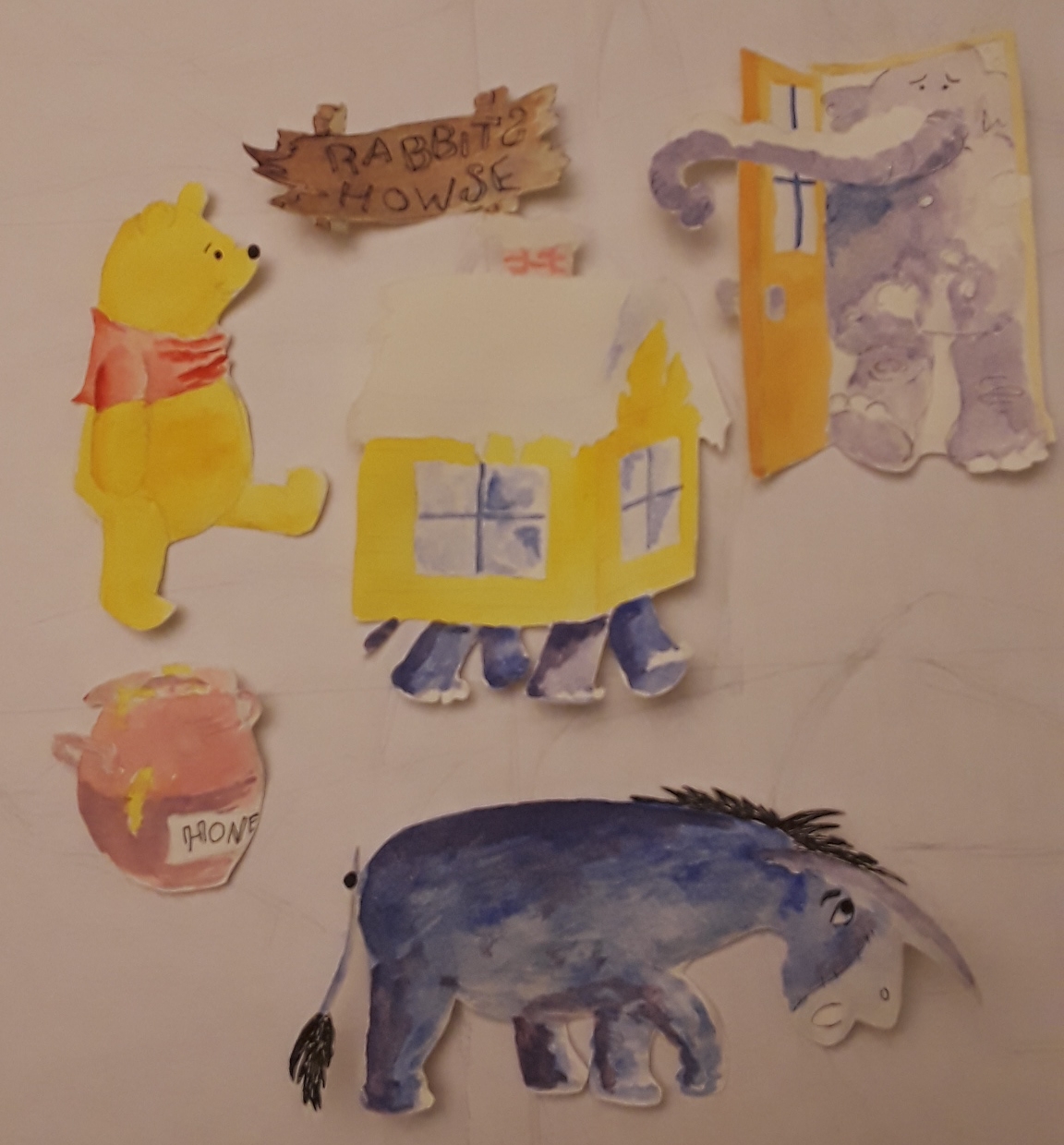
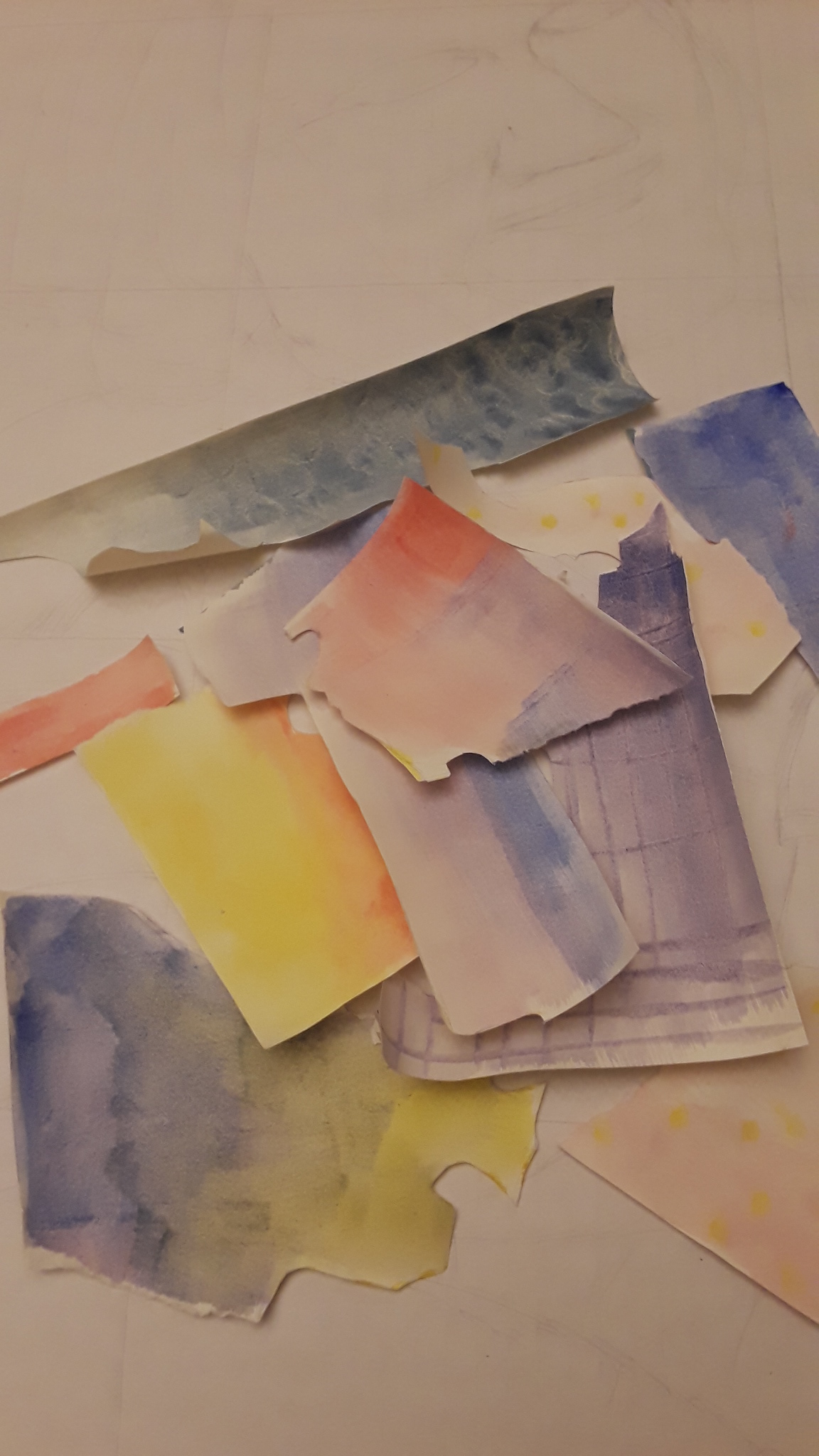
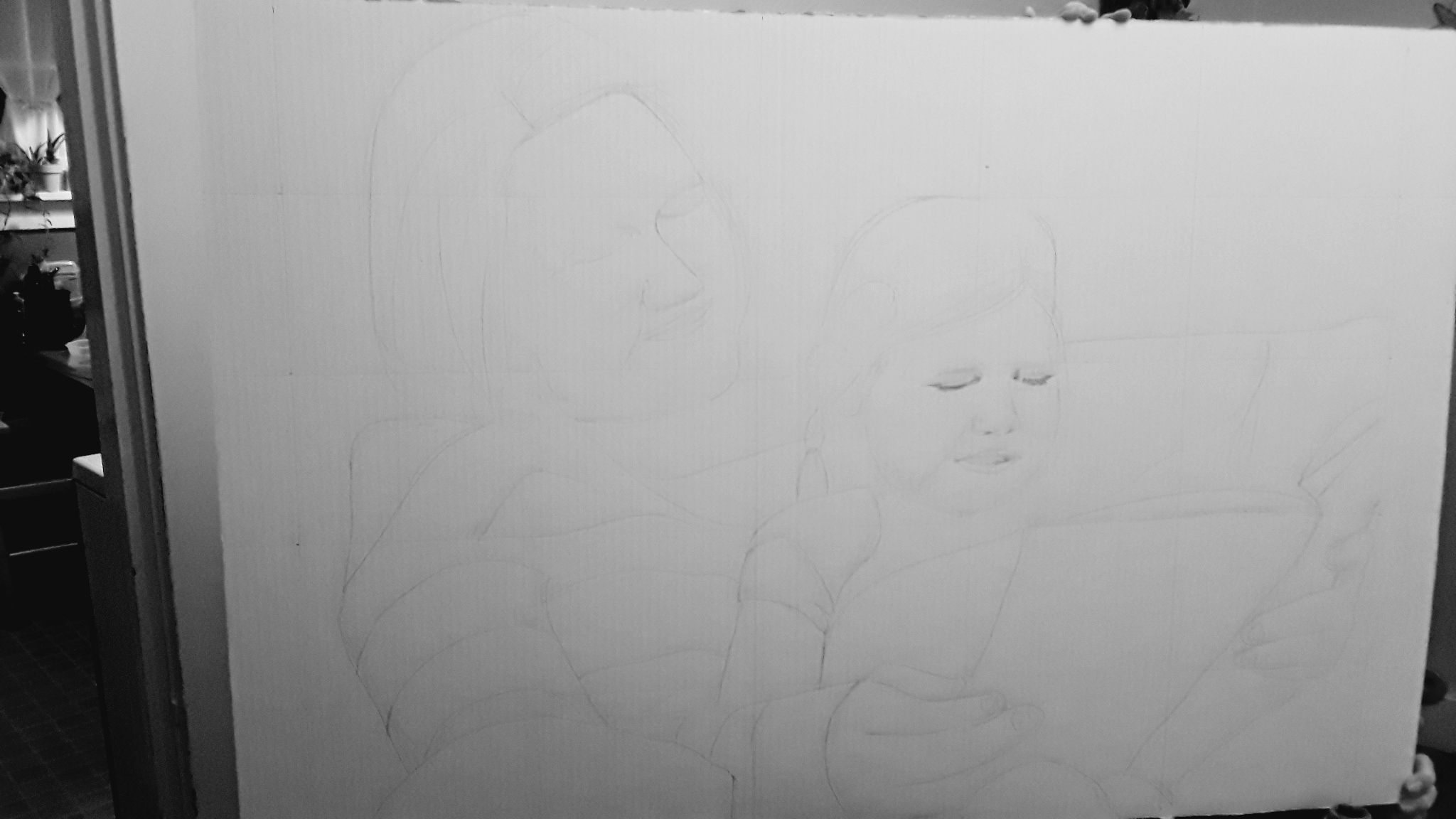
I took the picture of my sister and niece reading a story to base my project off of which I printed off to work with. Below are the characters which I drew painted from my favorite childhood stories. The leftover scraps of paper I painted with gouache and cut up to use in the collage. On the right is an image of my poster board before I glued down any paper. It has a light sketch of the picture. Once I finished sketching it out, I started glueing down paper, occasionally including one of the characters.
Composition Two
For the second composition, I weaved together two images–an image of my sister reading a story to my niece, and an old photo of my parents when they were younger. I visualized that the two images would both still be visible but fragmented and that the gestalt principle of closure would allow us to fill in the missing pieces of these pictures. I pictured that weaving the pictures together would show how the different generations are intertwined and cannot be completely separated from each other. Nevertheless, they are still distinguishable from each other. To create this composition, I printed off both pictures, one in color and the other in black and white. I then cut them into pieces. Each piece I cut into a spiral which could be weaved into the spiral from the opposite image. Then I taped them together and glued them down onto the poster board.
The illusion of space is achieved by the overlapping of the images, and the individual elements of space in each picture. The image of my parents fades to the background because the image is blurred and in black and white, whereas the image of the my sister and niece seems to come forward because it is more clear and in color. The illusion of motion is achieved by the fragmentation and repetition of shapes. The weaving of the the different pieces shows the spirals in each piece that was cut out.
The process of weaving together the different pictures was a little tricky with the paper because it doesn’t behave in the same way that fabric or thread would. I’ve certainly learned with the project that I really just need to start working with materials and creating something so that I don’t become paralyzed by the possibilities of what is available.
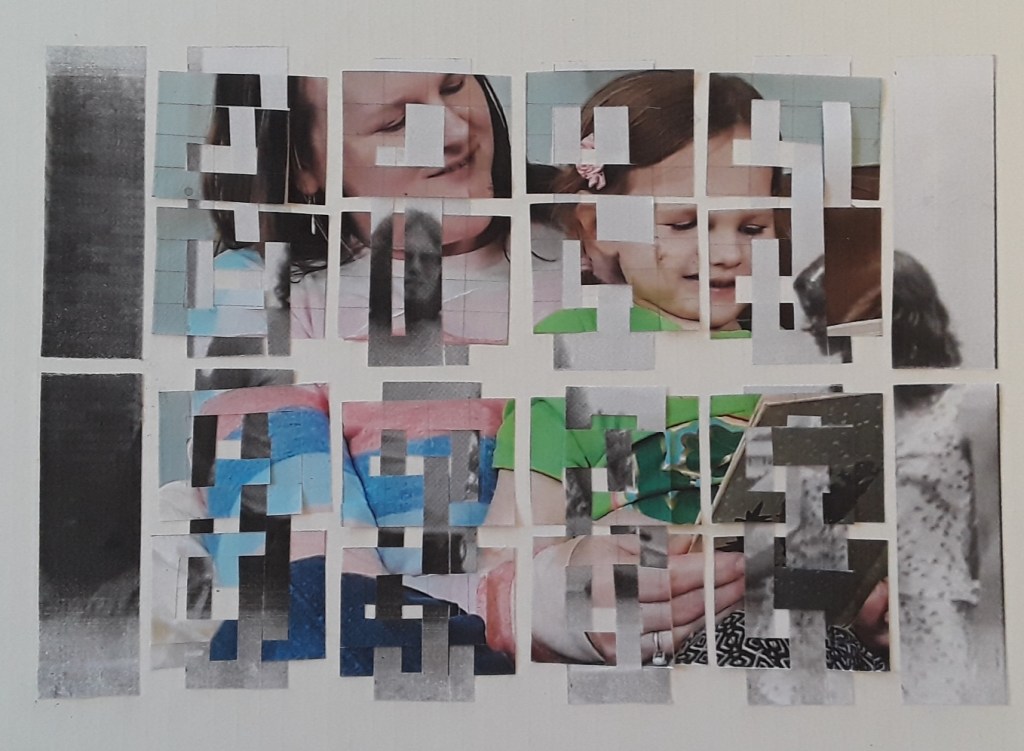
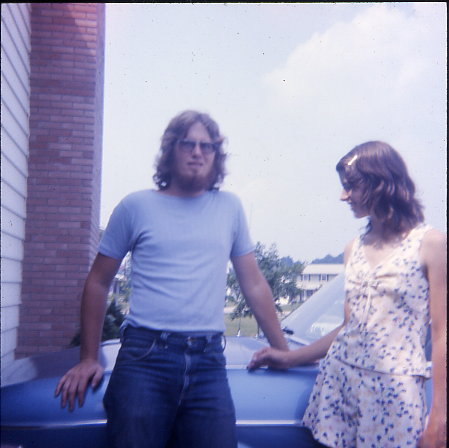
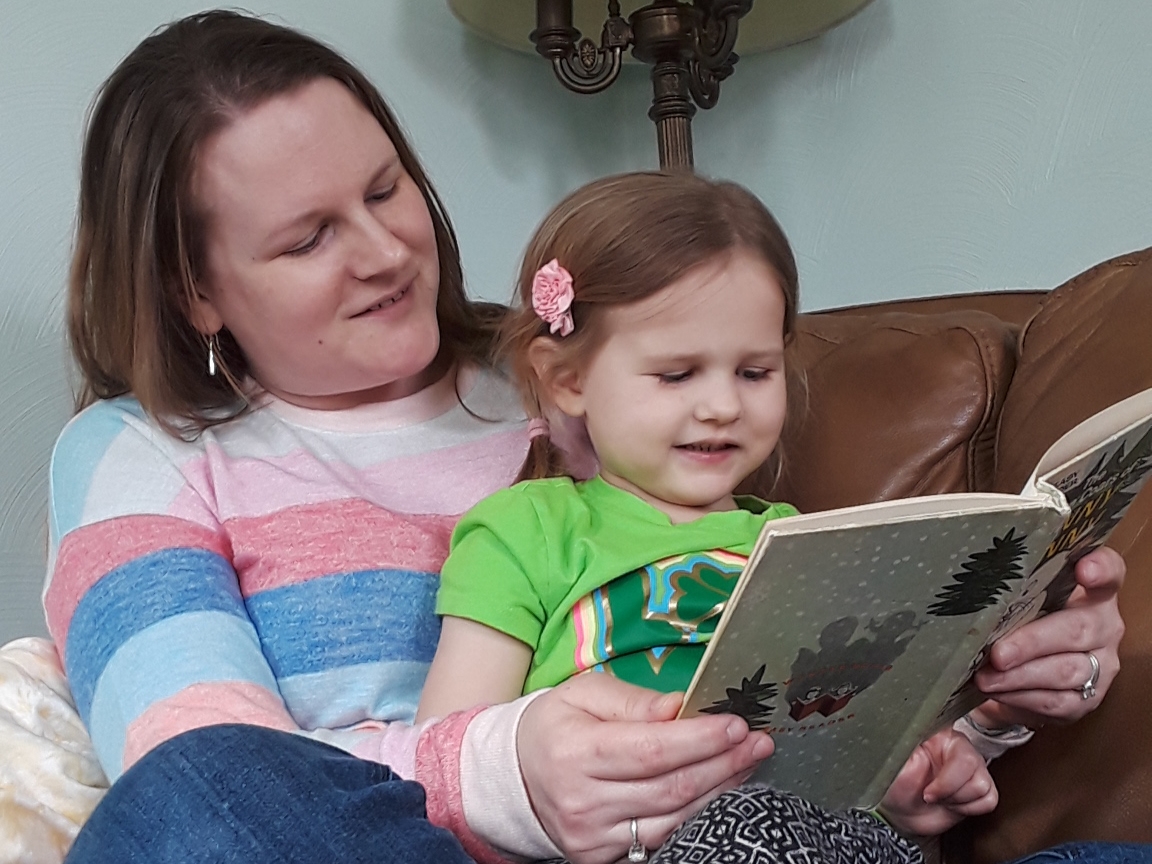
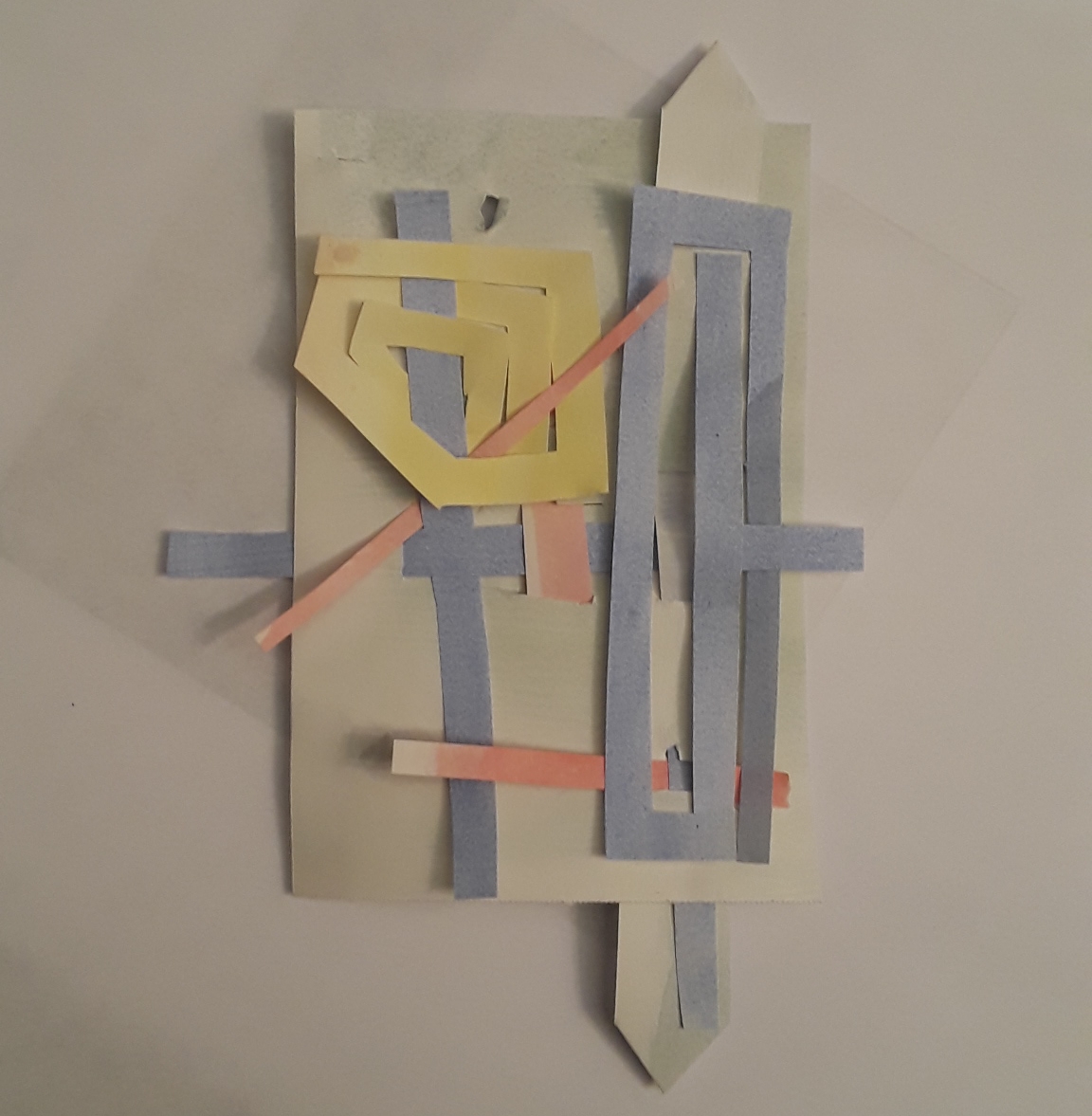
Above are the two pictures I used for the second composition. On the left is an old picture of my parents from when they were younger this picture I edited in Graphic and printed out in black and white. On the top right is the picture of my sister and niece reading. Below that is a material mockup I made to experiment with weaving paper.
 Vali's Art