




Explain the ideas that underlie your decision making. What is it that you seek to communicate to your viewer?
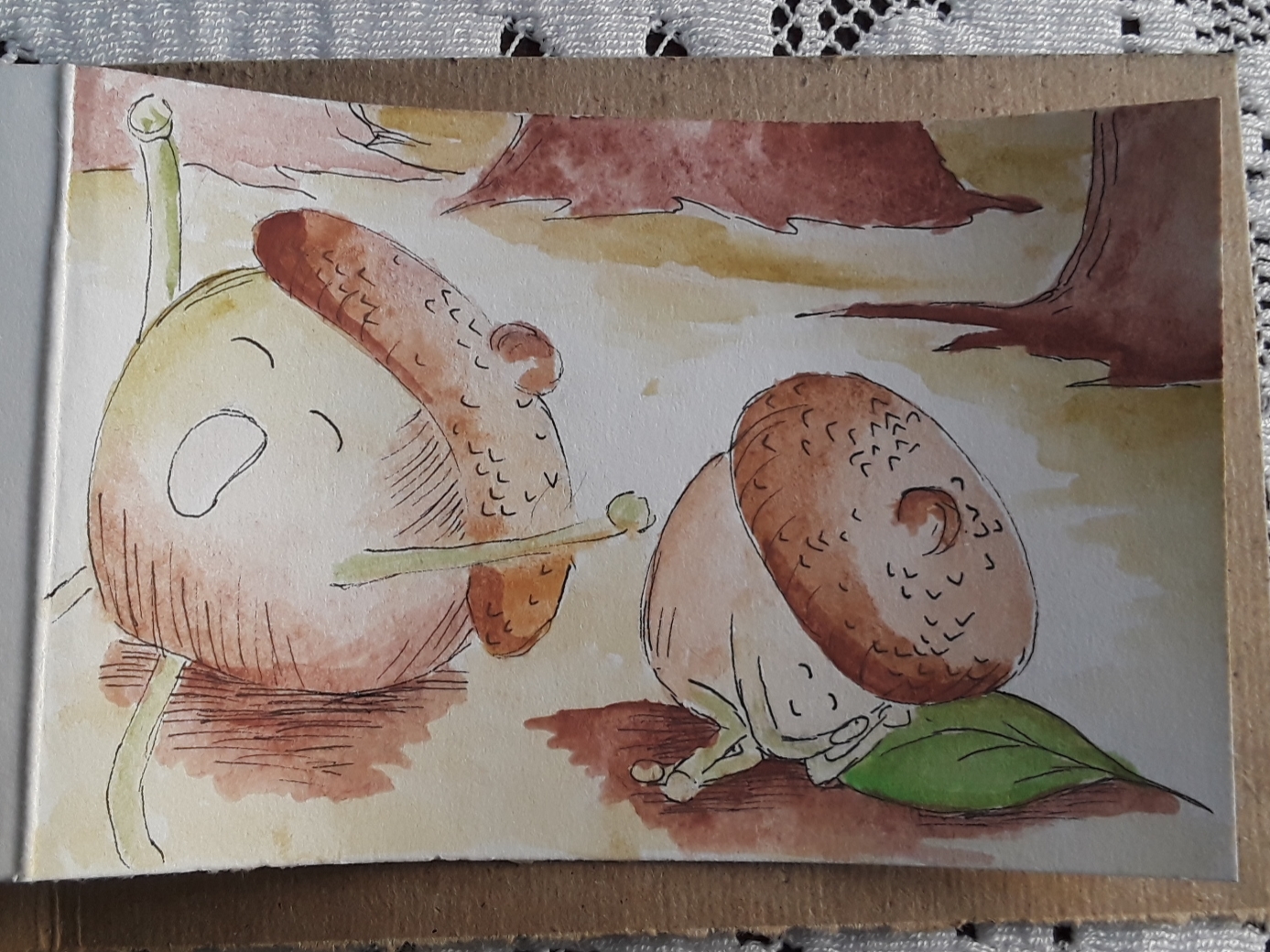
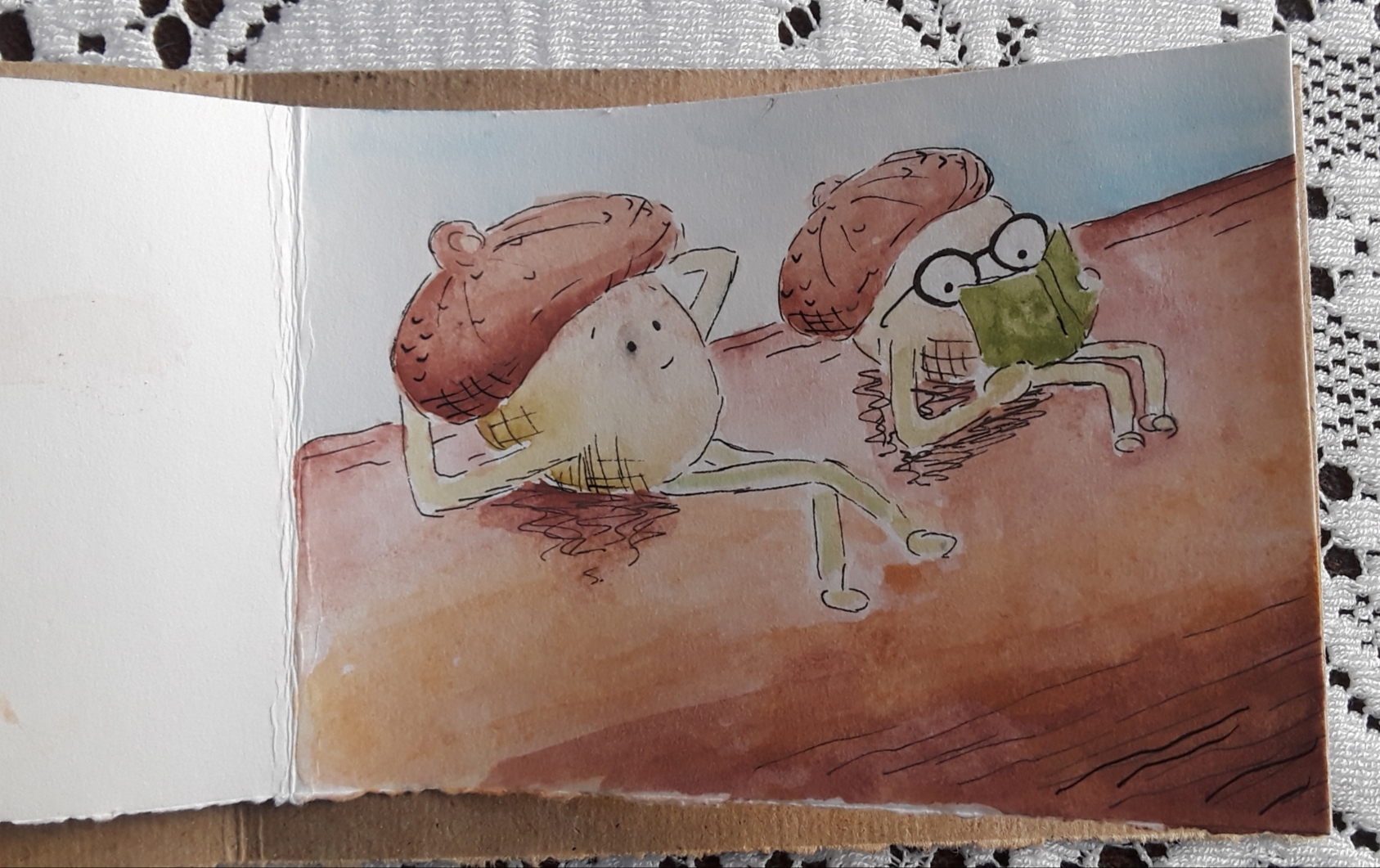
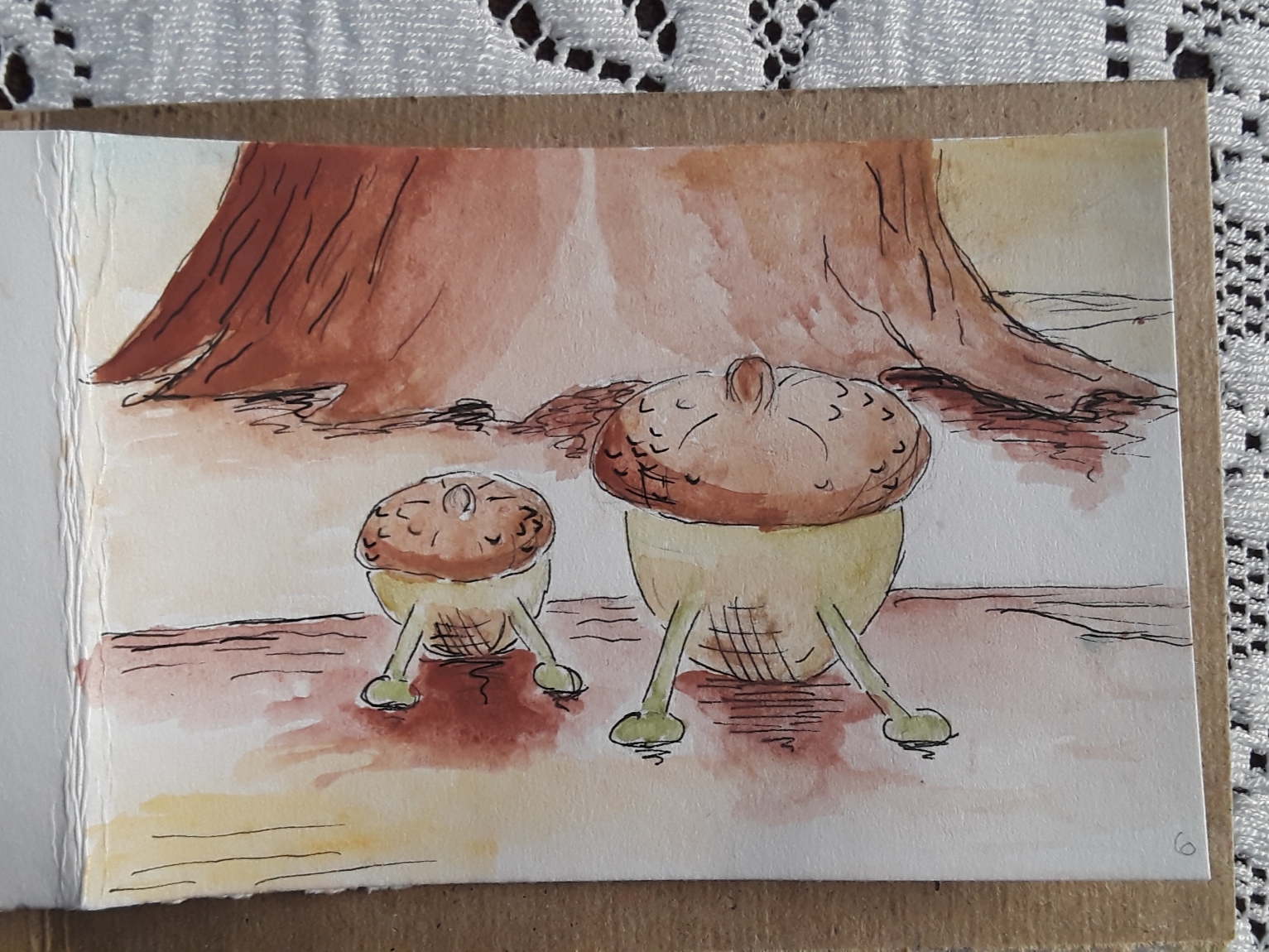
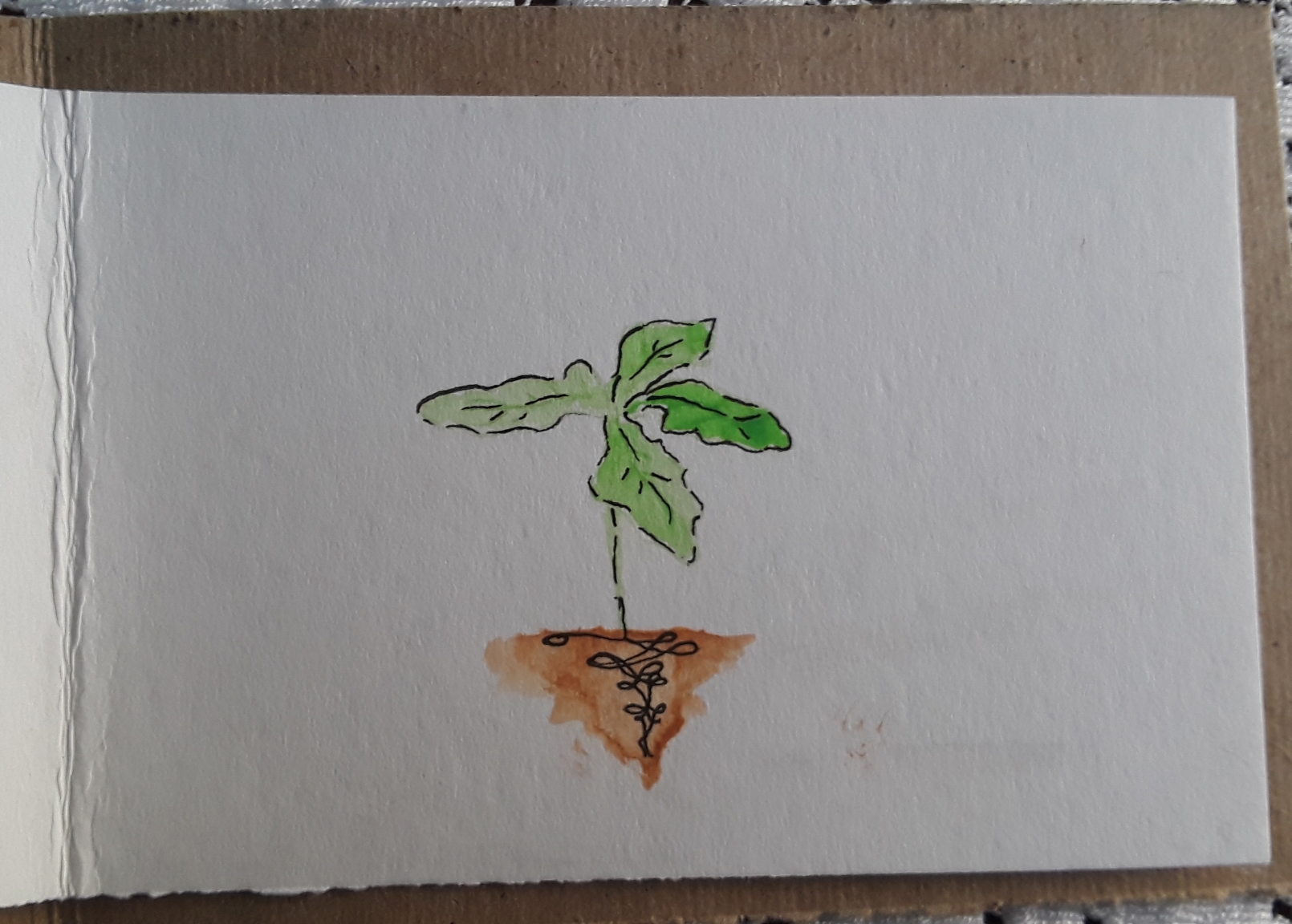
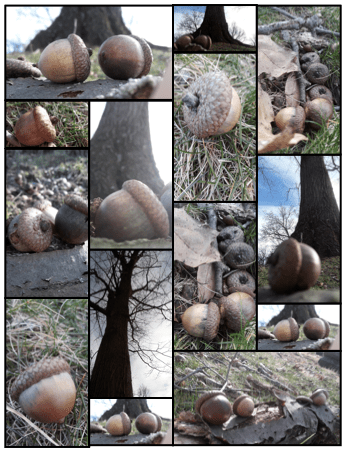
Going to the cemetery, I saw these acorns on the ground and wanted to get pictures of them with the oak behind them. I found it striking that these little acorns had the means to become as great as the oak from which they came. I wanted to extend this same invitation to the viewer to consider their own calling–both to enjoy the small joys in life, and at the end of the day to look up and consider both their humble beginnings and their own call to greatness. I decided to communicate this to the viewer through a short storybook, where two little acorns come to life and explore the world around them.
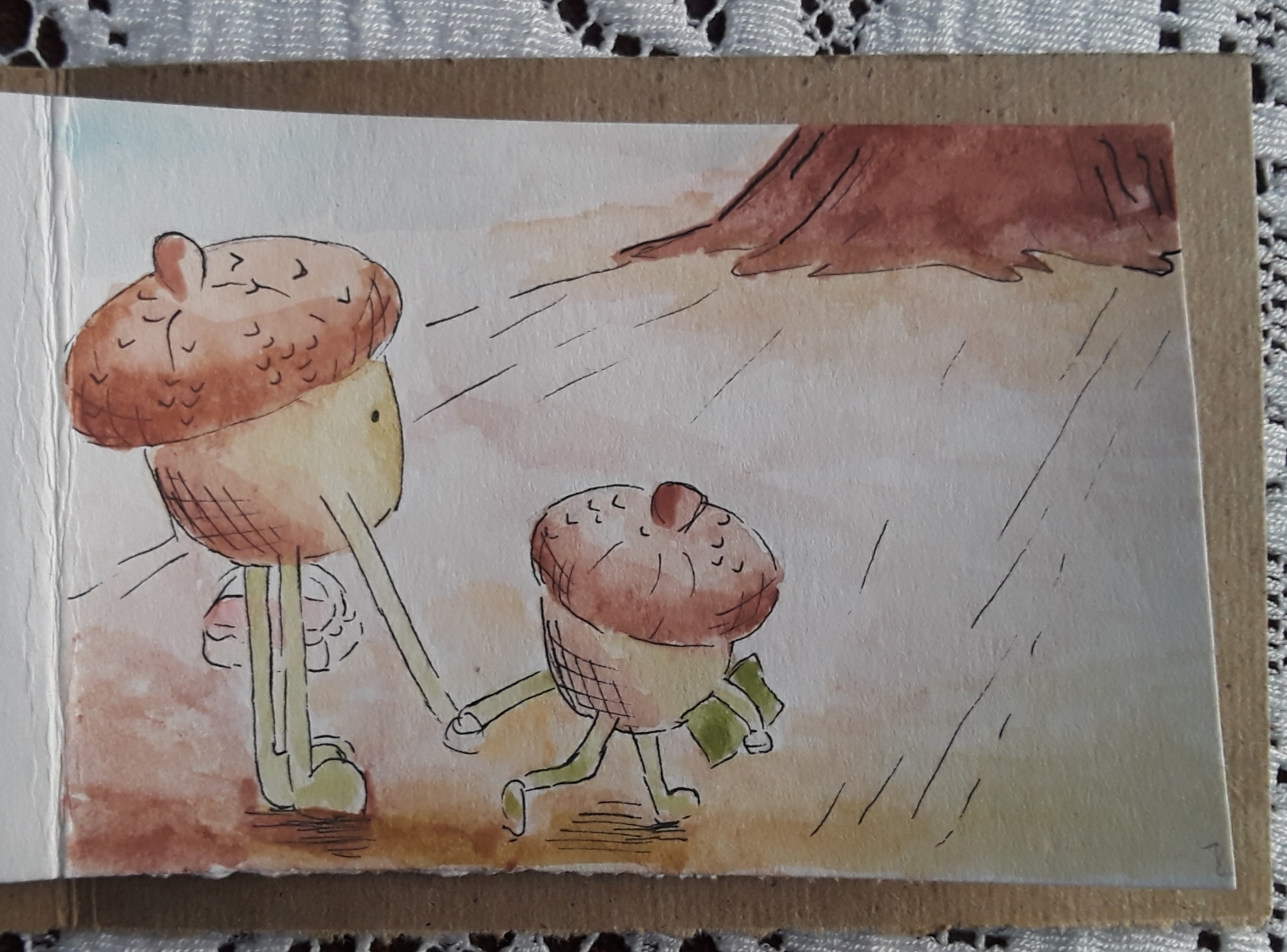
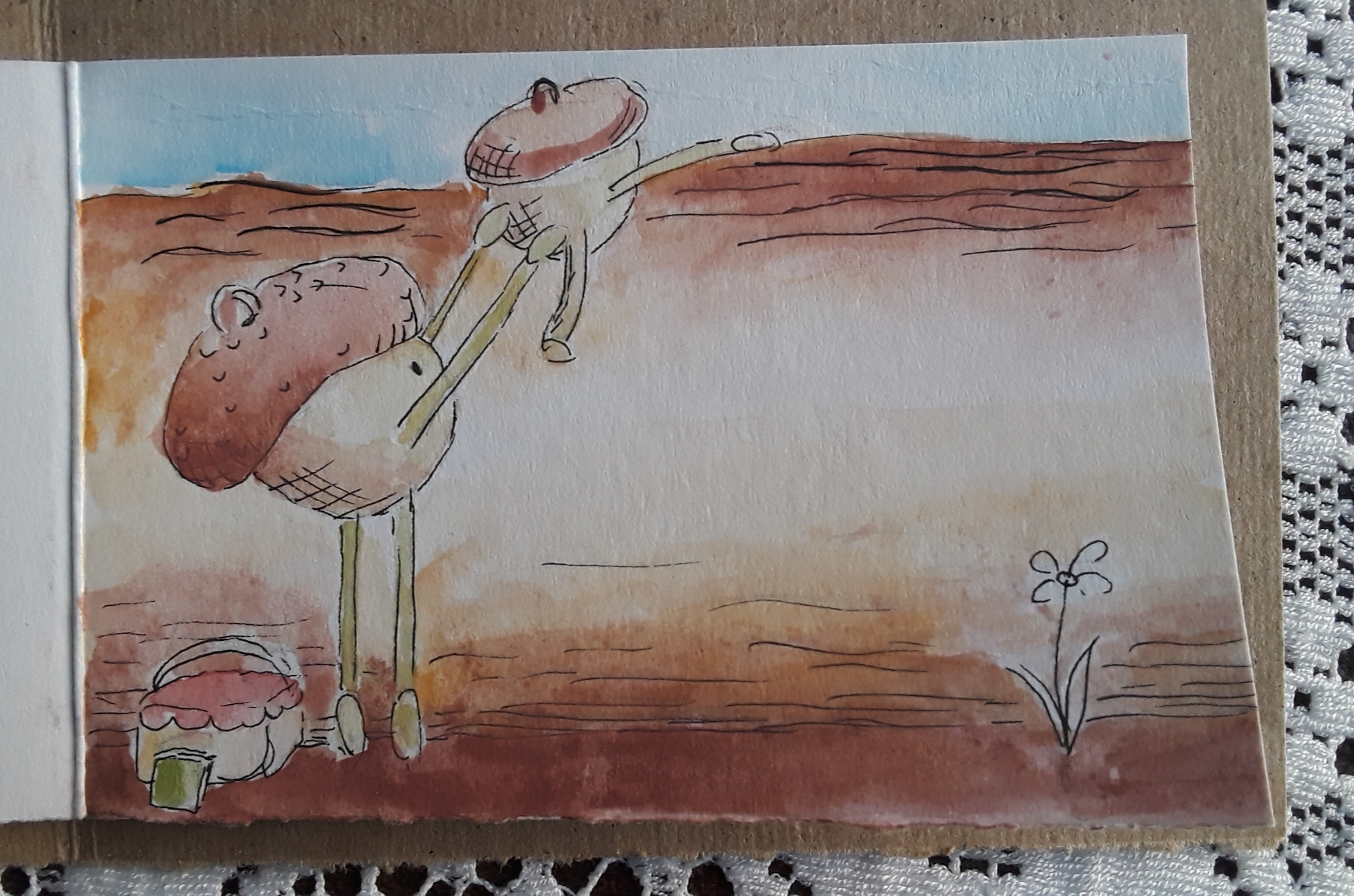
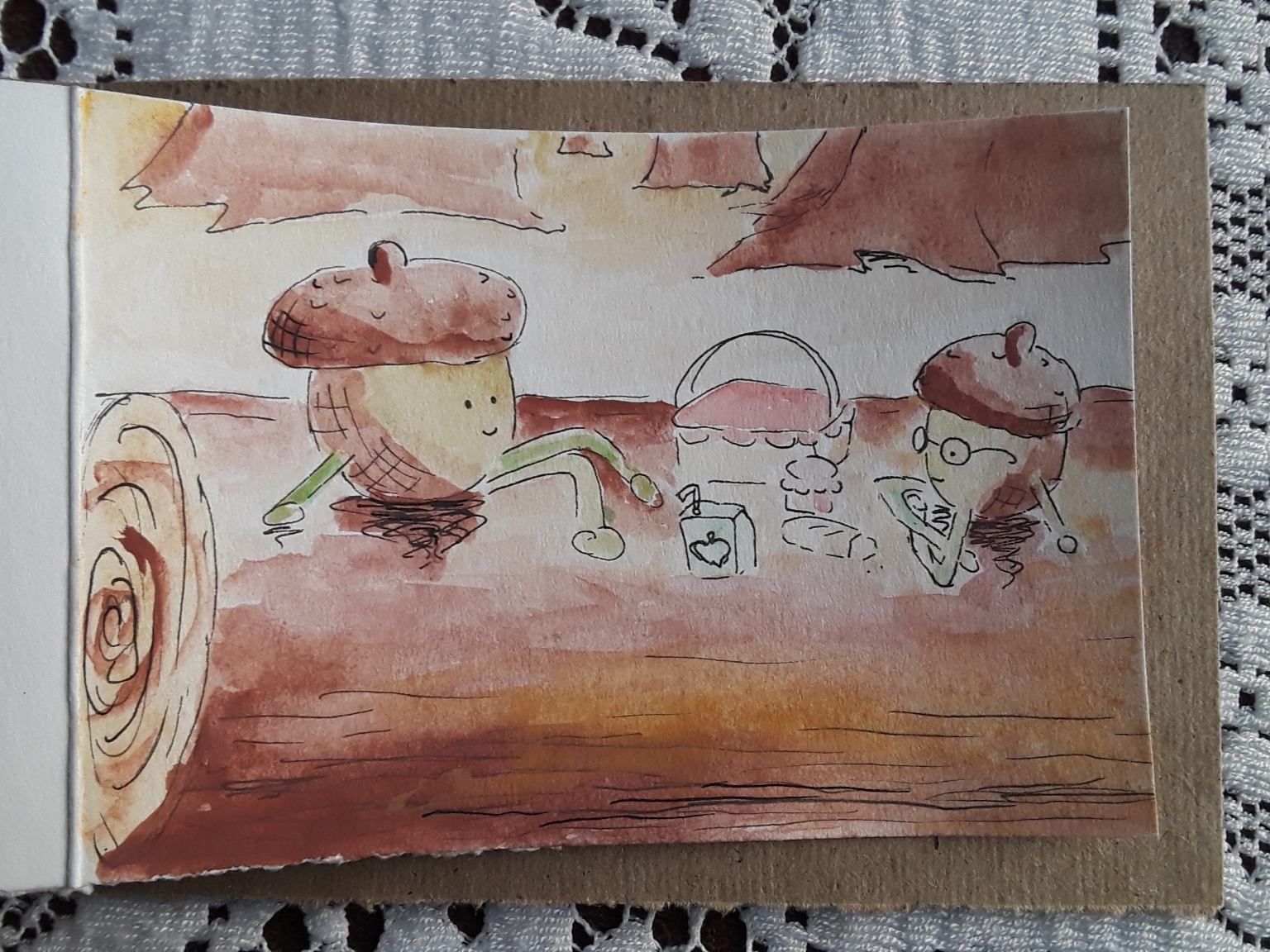
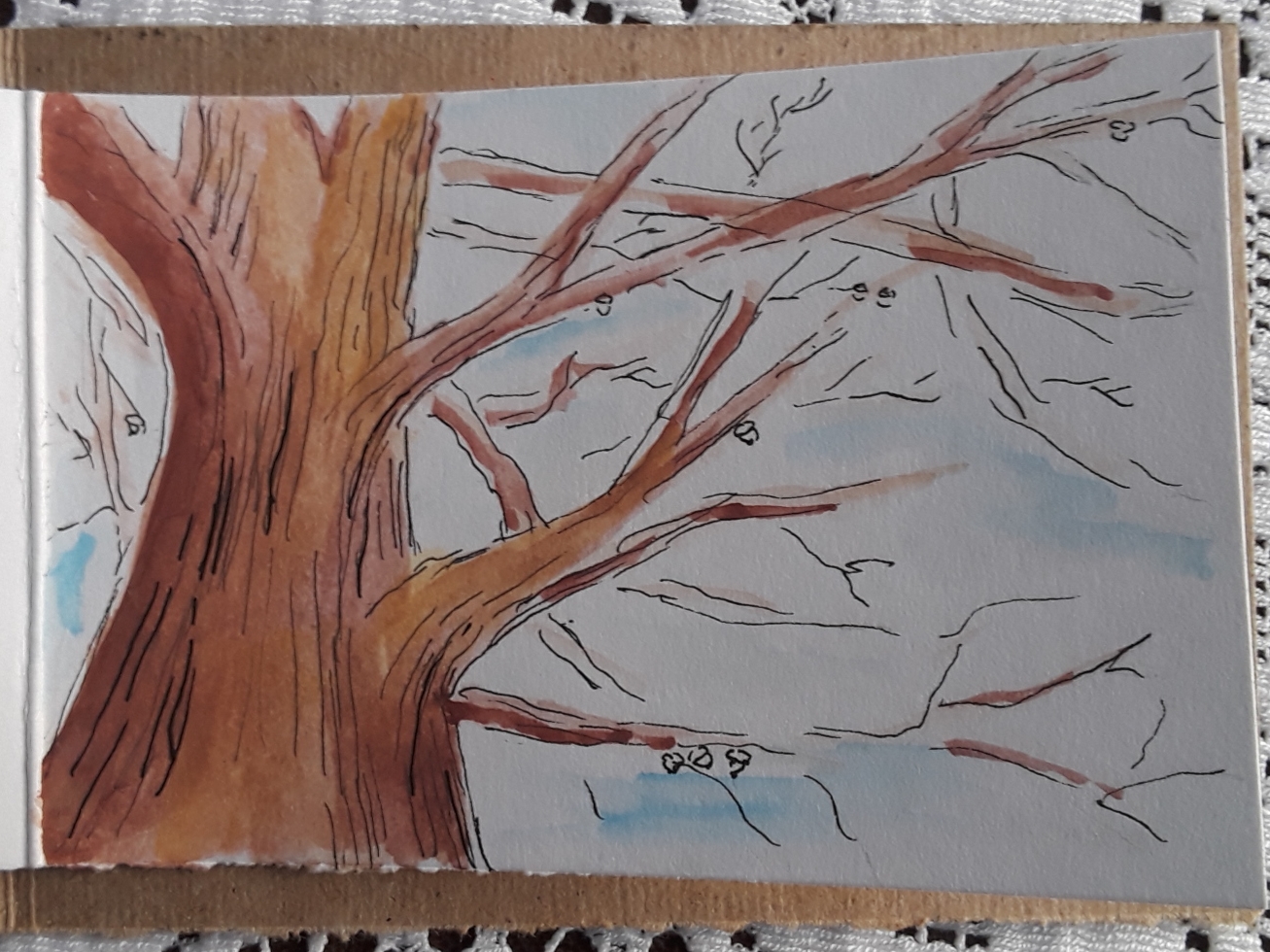
Each page has a small section of the base of an oak in the background, foreshadowing the greatness to which these humble acorns are called. Unaware of the great, tall oaks surrounding them, let alone that they will one day be share in its glory, the two nameless acorns just go about their day. However, towards the end we see the two acorns admiring the view of the tall oak tree which they may one day become.
How have you employed the Gestalt Principles of Design, unity and variety to arrange the imagery? How does the image placement communicate to the viewer regardless of the imagery? How do these decisions support your idea?
I have employed the use of repetition of the base of an oak tree or log in the background of each picture, foreshadowing the greatness to which these humble acorns are called; as well as pointing to the omnipotent greatness which surrounds our day to day lives. Employing the Gestalt Principle of grouping, the two acorns are always together sharing in the joys of life together, pointing to their companionship. There is also an element of variety between the two acorns: one taller, one smaller, with different personalities, yet they came from the same place and are both called to greatness. For the majority of the story the composition is zoomed in on the two acorns and their day to day lives. It is not until the end that the viewer sees a broader perspective. This communicates to the viewer a change in perspective for the two acorns.
What materials did you choose and why? How do these materials support the idea?
My materials include watercolor, paper, cardboard, pens and pictures of acorns. My idea originated from some pictures I took of acorns at the cemetery. The use of these pictures incorporated an understanding of chance in the project, as the position of the acorns when they fall is left up to chance. These acorns represent humble beginnings–an idea further supported by the simplicity of watercolor and ink pictures. The format of a short story supports the narration and progression of their day.


Word Map


 Vali's Art